Mobile Apps
React Native apps for iOS and Android that work offline and ship to the stores.
Cross-platform iOS and Android apps in React Native — offline-first data, push notifications, deep links, and a store release handled end to end, backed by an API designed for mobile.
A good mobile app is mostly invisible engineering: local-first data that survives bad networks, sync that resolves conflicts, push that arrives, and links that open the right screen.
I build the app and the backend it talks to, so the API, auth, and notification pipeline are designed for mobile from the start — then take the app through TestFlight, Play Console, and store review.
Capabilities
What's included
- 01
One React Native codebase for iOS and Android, in TypeScript
- 02
Offline-first storage with background sync and conflict handling
- 03
Push notifications via FCM / APNs with per-user targeting
- 04
Deep links and universal links into specific screens
- 05
Secure auth with refresh-token rotation and biometric unlock
- 06
App Store and Google Play release, including review and updates
Fit
Who it's for
- Founders launching a consumer or B2B app on both platforms
- Businesses adding a customer or field-staff app to an existing web platform
- Delivery, fintech, and commerce apps that must work on patchy networks
- Teams with an existing app that needs a stable rebuild
Deliverables
What you get
- iOS and Android apps published under your developer accounts
- Mobile-ready API with auth, push, and sync endpoints
- Crash reporting and analytics wired in
- Release process for OTA updates and store versions
- Source code and handover documentation
Process
How we work
- Step 1
Discovery
A working session on goals, users, constraints, and existing systems. You get a written scope, open questions, and a clear recommendation on what to build first.
- Step 2
Architecture
Data model, service boundaries, auth, async work, and infrastructure are designed up front and shared as a short architecture document before any code is written.
- Step 3
Build
Milestone-based delivery with a staging environment from week one, regular demos, and code in your repository — not a black box handed over at the end.
- Step 4
Launch
Production deployment with CI/CD, monitoring, backups, and a rollback path. Launch is rehearsed on staging so release day is uneventful.
- Step 5
Support
Post-launch stabilisation, then an optional monthly retainer for features, upgrades, and on-call fixes. Handover docs are included either way.
Proof
Related work
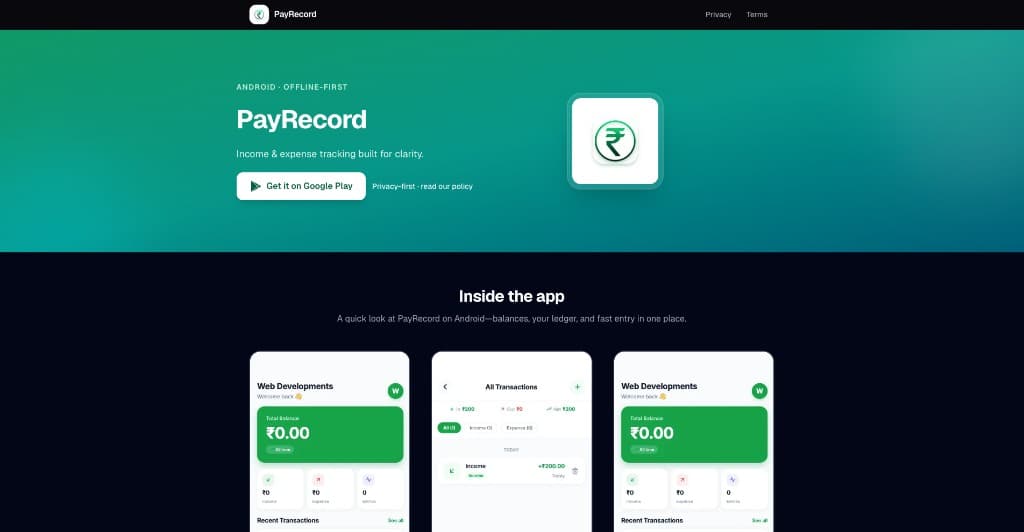
PayRecord
Offline-first income and expense tracker for Android and iOS. My own product, live on both stores.
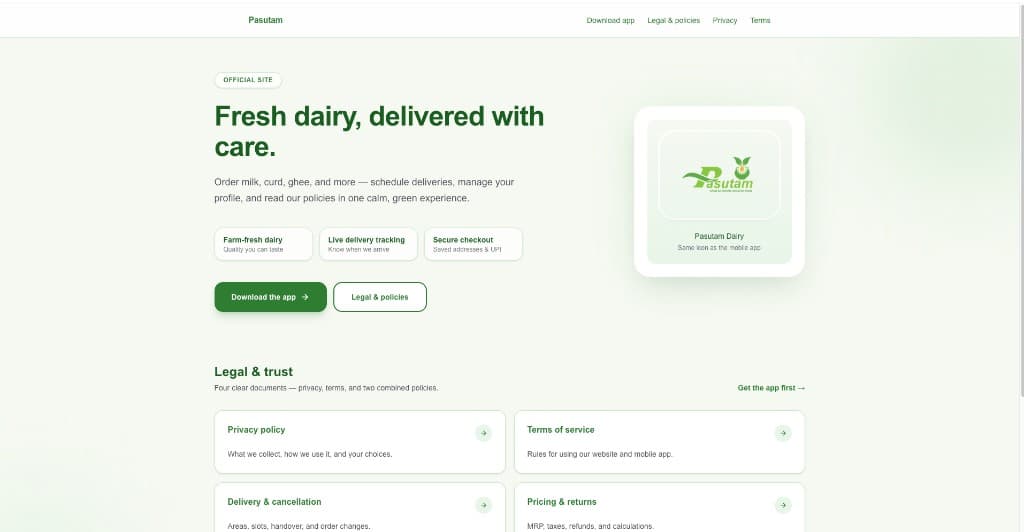
Pasutam Dairy
Dairy delivery app for Pasutam Farm — scheduling, order tracking and UPI checkout on Android and iOS.
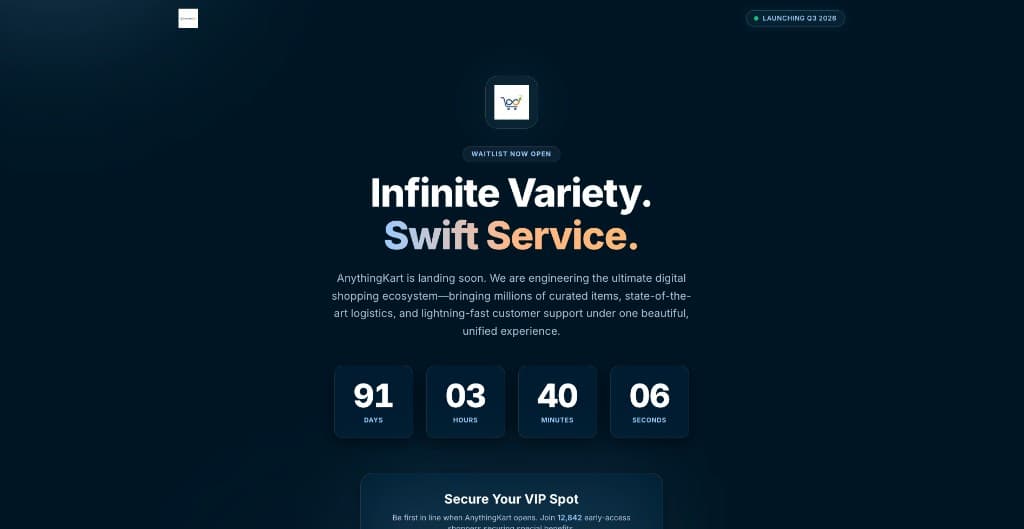
AnythingKart
Founder venture — multi-category e-commerce marketplace. App live, marketplace in progress.
FAQ
Common questions
Something else? Ask directly.
Why React Native instead of separate native apps?
One TypeScript codebase ships to both iOS and Android, which roughly halves build and maintenance effort for most business apps. Native modules are added where a feature genuinely needs platform-specific code.
Can the app work without an internet connection?
Yes. Offline-first apps store data locally and sync in the background when the connection returns, with conflict handling designed around how your users actually work.
Do you handle App Store and Google Play submission?
Yes — builds, store listings, review submissions, and responding to review feedback. Apps are published under your own developer accounts so you keep full ownership.
Do you also build the backend for the app?
Usually, yes. Auth, push notifications, sync, and payments work best when the API is designed for mobile from the start. I can also integrate with an existing backend.
How are updates shipped after launch?
JavaScript-level fixes can ship over the air without a store review; native changes go through a normal store release. Both are covered under an optional monthly retainer.
Also available
Other services
- Custom Web Platforms & SaaSPortals, dashboards, and multi-tenant SaaS — system-designed from day one.
- Integrations, Automation & AIWhatsApp, payments, PDFs, webhooks and AI assistants — wired in reliably, not bolted on.
- Cloud, DevOps & ScalingDeploy it, watch it, and keep it fast under real load — on AWS, GCP, DigitalOcean, or a VPS.
- System Design & Technical LeadershipArchitecture reviews, scaling plans, and fractional CTO support for startups.
Have something to build?
Tell me what you are building and where it is stuck. You will get a straight answer on approach, timeline, and whether I am the right fit — rates are discussed once the scope is clear.
India · UAE (Dubai) · remote-friendly